
Introduction
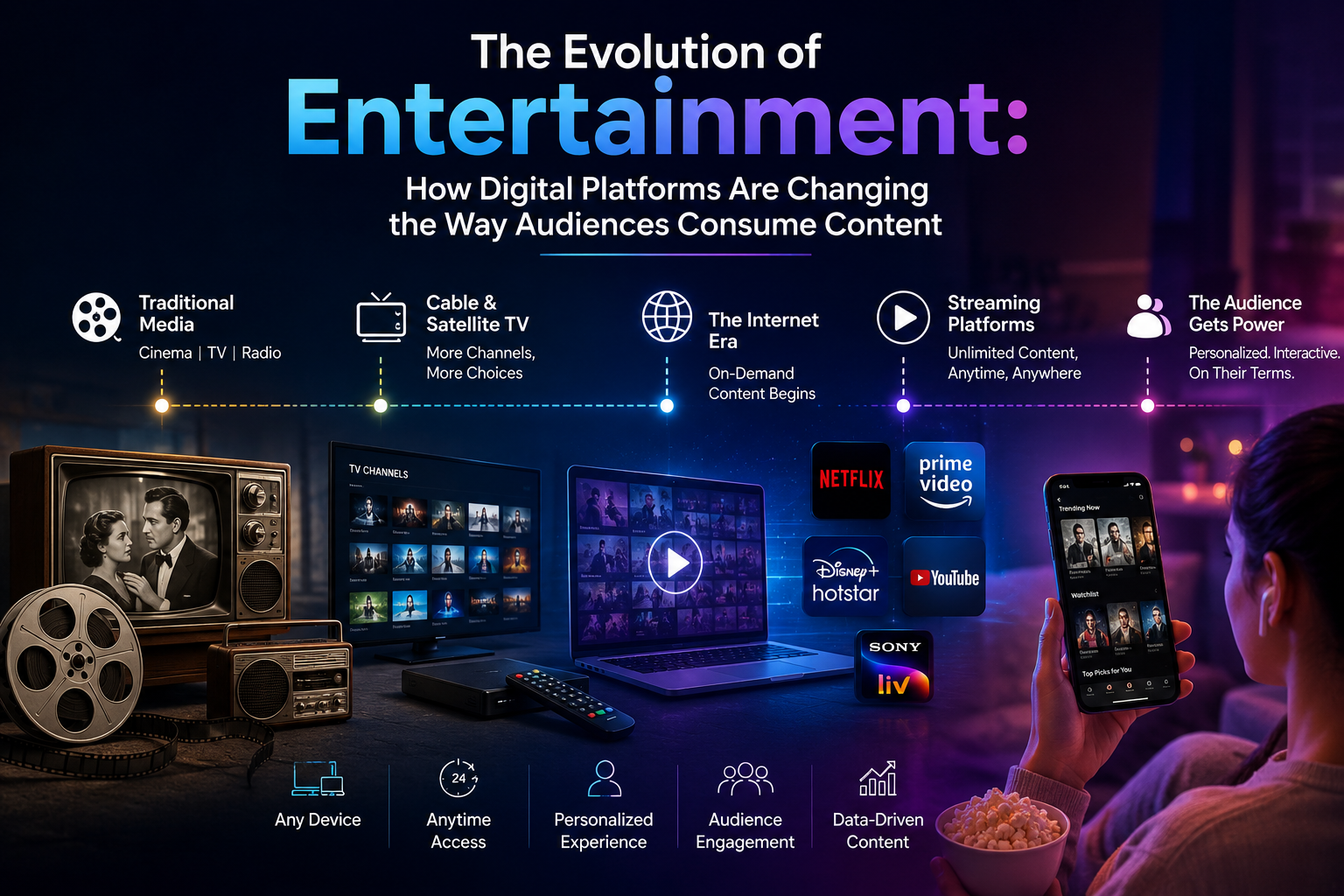
Entertainment has always reflected the changing habits, technologies and cultural preferences of society. From radio and cinema halls to television and streaming platforms, every technological shift has changed how audiences discover, experience and discuss content. Today, digital technology is driving another major transformation.
Smartphones, streaming services, social media platforms and short-form video applications have made entertainment more accessible than ever. Audiences are no longer restricted to fixed schedules or specific locations. They can watch, listen to and interact with content whenever they choose.
This transformation has created new opportunities for creators while also changing the competitive environment for traditional entertainment businesses.
From Scheduled Viewing to On-Demand Entertainment
Television introduced audiences to scheduled entertainment, where viewers had to watch programmes at particular times. Digital platforms have largely removed this limitation.
Streaming services allow audiences to select what they want to watch and when they want to watch it. This has encouraged a more personalised entertainment experience.
The change is particularly visible among younger audiences, who often move between different formats throughout the day. A person may watch a film on a streaming service, follow a web series, view short videos on social media and listen to a podcast within the same day.
Entertainment consumption has therefore become more flexible and fragmented.
The Rise of Short-Form Content
Short-form video has become one of the most influential formats in digital entertainment. Brief videos can communicate humour, information, music, storytelling and commentary within a few minutes or even seconds.
The popularity of this format has changed the way creators approach storytelling. Content often needs to capture attention immediately, while visual editing, music and concise narratives have become increasingly important.
Short-form platforms have also lowered the barrier to entry for aspiring creators. Individuals can produce content using smartphones and basic editing tools without requiring a traditional production studio.
Creators Are Becoming Entertainment Brands
The rise of the creator economy has changed the relationship between audiences and entertainers. Social media personalities, comedians, musicians, gamers and independent filmmakers can build large communities without relying entirely on traditional media companies.
Direct communication with audiences has become one of the strongest advantages of digital platforms. Creators can receive immediate feedback, understand audience preferences and develop content around emerging interests.
Some creators have also expanded into businesses, launching merchandise, production companies, podcasts, events and digital products.
Traditional Entertainment Is Adapting
The growth of digital platforms does not necessarily mean that traditional entertainment is disappearing. Instead, established industries are adapting.
Film studios, television networks, music companies and publishers increasingly use digital platforms to promote and distribute their content. A film can have a theatrical release before eventually reaching a streaming service, while musicians can combine live performances with digital releases and social media engagement.
The boundaries between traditional and digital entertainment are therefore becoming increasingly blurred.
Global Content Is Becoming More Accessible
Digital distribution has also expanded the reach of regional and international content. Audiences can discover films, series, music and creators from different countries without waiting for traditional distribution channels.
This has encouraged cross-cultural entertainment consumption. Regional Indian content, for example, can find audiences beyond its original language market when supported by subtitles, dubbing and digital distribution.
At the same time, international content can influence local storytelling styles, genres and production techniques.
Data Is Influencing Content Decisions
Entertainment companies are increasingly using audience data to understand what people watch, when they stop watching and which genres attract attention.
This information can help platforms make decisions about recommendations, marketing and future content investments.
Data-driven decision-making can improve the ability of companies to match content with audience interests. However, there is also a risk that excessive dependence on existing viewing patterns could discourage experimentation.
Creative industries still depend on originality and the willingness to explore ideas that audiences may not have previously considered.
The Importance of Community
Modern entertainment is increasingly interactive. Audiences do not simply consume content; they discuss it, review it, remix it and share reactions online.
Fan communities can significantly influence the visibility of films, series, musicians and creators. Online conversations can turn a relatively unknown project into a widely discussed cultural phenomenon.
This has made audience engagement an important part of entertainment strategy.
The Future of Entertainment
The entertainment industry is likely to become even more personalised, interactive and globally connected. Emerging technologies may create new forms of immersive storytelling, while artificial intelligence and advanced production tools could change how content is created.
However, technology will remain a tool. Strong storytelling, emotional connection and originality will continue to determine whether audiences care about a piece of entertainment.
Conclusion
The entertainment industry is moving from a one-way model of content consumption toward a more flexible and interactive ecosystem. Audiences have more choices, creators have more opportunities and traditional companies are adapting to new distribution models.
The future will likely belong to entertainment businesses and creators that can combine technology with compelling storytelling. As platforms continue to evolve, audiences will gain greater control over what they watch, listen to and share, making entertainment more personalised than ever before.