
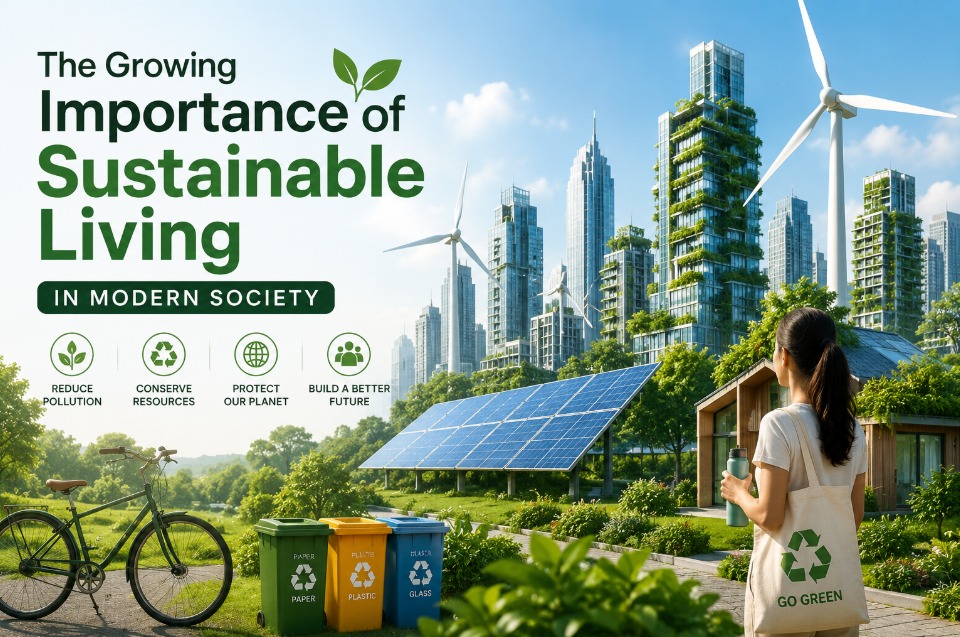
Sustainable living has become an increasingly important topic as people, businesses, communities, and governments look for better ways to use resources and protect the environment. Rapid urbanization, growing consumption, technological development, and changing lifestyles have created new challenges related to waste, energy use, water consumption, and environmental protection.
Sustainable living does not necessarily require people to completely change their lifestyles. Instead, it encourages individuals to make thoughtful choices that reduce unnecessary waste and use resources more responsibly.
From carrying reusable bags and reducing food waste to using energy-efficient appliances and choosing public transportation, small actions can contribute to broader environmental goals. At the same time, businesses and communities have an important role to play by developing sustainable products, improving infrastructure, and encouraging responsible consumption.
Understanding Sustainable Living
Sustainable living refers to making lifestyle choices that aim to use natural resources responsibly while reducing unnecessary environmental impact.
Sustainability Starts With Everyday Choices
People make decisions every day about food, transportation, clothing, energy, shopping, and waste.
These decisions can influence how many resources are consumed and how much waste is produced.
For example, repairing an item instead of immediately replacing it can extend its useful life.
Sustainability Is About Long-Term Thinking
Sustainable living encourages people to consider the long-term effects of their choices.
Instead of focusing only on immediate convenience, individuals can think about durability, reuse, resource consumption, and waste.
This approach can also encourage more thoughtful purchasing habits.
Reducing Household Waste
Waste management is an important part of sustainable living.
Reusing Items
Many household products can be reused instead of being thrown away after one use.
Containers, bags, clothing, furniture, and other items may have additional uses when they are maintained properly.
Reusing products can reduce unnecessary consumption and extend the useful life of everyday items.
Recycling Responsibly
Recycling allows certain materials to be processed and used again.
Paper, glass, metal, and some types of plastic can be recyclable depending on local systems and facilities.
People should follow local recycling guidelines because accepted materials can vary from one area to another.
Reducing Food Waste
Food waste is another area where households can make practical changes.
Planning Meals
Meal planning can help people purchase appropriate quantities of food.
Making a shopping list and checking existing supplies before buying groceries can reduce unnecessary purchases.
Storing Food Properly
Proper storage can help certain foods remain fresh for longer.
Organizing refrigerators and storage areas can also make it easier to use food before it expires.
Using Leftovers Creatively
Leftover food can sometimes be transformed into another meal.
For example, cooked vegetables can be incorporated into soups or other dishes, while leftover ingredients can be used in sandwiches, salads, or other recipes.
This can reduce the amount of edible food that ends up being discarded.
Energy Conservation at Home
Energy use is an important part of household sustainability.
Choosing Energy-Efficient Appliances
Energy-efficient appliances can use less electricity while performing their intended functions.
When purchasing new appliances, consumers can consider energy ratings and long-term operating costs alongside price and features.
Switching Off Unnecessary Devices
Turning off lights and appliances when they are not needed is a simple habit.
Using natural light during the day when practical can also reduce unnecessary electricity use.
Improving Home Efficiency
Proper ventilation, insulation, and efficient cooling or heating systems can contribute to more effective energy use.
The most appropriate measures depend on the local climate and type of building.
Sustainable Transportation
Transportation is another area where individual choices can make a difference.
Walking and Cycling
Walking and cycling can be practical options for short-distance travel.
They can also provide opportunities for physical activity while reducing reliance on motorized transportation.
Public Transportation
Buses, trains, metro systems, and other forms of public transportation allow multiple people to travel using shared infrastructure.
Using public transportation where convenient can reduce the number of individual vehicles on roads.
Carpooling
Sharing rides with colleagues, friends, or family members can reduce the number of vehicles required for certain journeys.
Carpooling can also help people share travel costs.
Sustainable Shopping Habits
Consumer behavior has a major role in sustainability.
Buying Only What Is Needed
Avoiding unnecessary purchases can reduce resource consumption.
Before buying something new, consumers can consider whether the product is genuinely needed and whether an existing item can serve the same purpose.
Choosing Durable Products
Products designed to last longer can reduce the need for frequent replacements.
Quality, repairability, warranty coverage, and maintenance options can be considered when making purchasing decisions.
Sustainable Fashion
The fashion industry has become an important part of discussions about responsible consumption.
Extending the Life of Clothing
Taking proper care of clothing can help garments last longer.
Repairing damaged items, donating usable clothes, exchanging garments, and purchasing second-hand clothing can provide alternatives to constantly buying new products.
Building a Practical Wardrobe
Choosing versatile clothing that can be worn in different combinations can reduce unnecessary purchases.
Consumers can focus on items that match their actual lifestyle rather than buying products simply because they are temporarily popular.
The Importance of Water Conservation
Water is an essential natural resource.
Avoiding Unnecessary Water Use
Simple habits such as turning off taps while brushing teeth, fixing leaks, and using water carefully during household activities can reduce unnecessary consumption.
Responsible Gardening
People with gardens can choose plants that are appropriate for local conditions.
Efficient watering methods and careful scheduling can help reduce unnecessary water use.
Sustainable Gardening
Gardening can become a sustainable activity when people use environmentally responsible practices.
Growing Plants at Home
Home gardens can provide opportunities to grow herbs, vegetables, flowers, and other plants.
Container gardening and balcony gardening can also be suitable for people living in apartments.
Composting
Composting can turn suitable organic waste into material that can be used to enrich soil.
Fruit and vegetable scraps, leaves, and other appropriate organic materials can be composted using suitable methods.
Sustainable Technology
Technology can support sustainability in several ways.
Smart Energy Management
Smart devices can help households monitor and manage electricity use.
Automated systems may allow people to control lighting, cooling, and other devices more efficiently.
Digital Alternatives
Digital documents, online communication, and electronic services can reduce the need for certain paper-based processes.
However, digital technology also requires energy and physical infrastructure, so responsible use remains important.
Businesses and Sustainable Practices
Sustainability is not only an individual responsibility.
Businesses can influence environmental outcomes through their products, operations, packaging, supply chains, and resource management.
Sustainable Packaging
Companies can explore packaging that uses fewer materials or incorporates recyclable and reusable components.
Reducing unnecessary packaging can also help minimize waste.
Efficient Business Operations
Businesses can improve energy efficiency, reduce material waste, optimize transportation, and encourage responsible resource use.
These changes can sometimes provide both environmental and operational benefits.
Sustainable Cities and Communities
Urban planning plays an important role in sustainable development.
Green Spaces
Parks, trees, gardens, and other green areas can improve the quality of urban environments.
They can provide recreational spaces while contributing to more attractive neighborhoods.
Better Public Infrastructure
Reliable public transportation, pedestrian pathways, cycling infrastructure, waste management systems, and efficient water services can support sustainable urban living.
Cities designed around practical mobility and resource efficiency can make sustainable choices easier for residents.
The Role of Education
Education is essential for building awareness about sustainability.
Teaching Sustainable Habits Early
Schools can introduce students to concepts such as recycling, water conservation, energy efficiency, biodiversity, and responsible consumption.
Practical activities can make these concepts easier to understand.
Awareness Leads to Better Decisions
When people understand the effects of their choices, they may be more likely to adopt responsible habits.
Education can therefore support long-term behavioral change.
Challenges of Sustainable Living
Although sustainable living offers many benefits, people may face practical challenges.
Convenience
Some sustainable choices may require additional planning.
For example, carrying reusable items, repairing products, or using public transportation may require more preparation than choosing the most convenient alternative.
Cost Considerations
Some sustainable products can have higher initial prices.
However, consumers should consider factors such as durability, maintenance, and long-term use rather than looking only at the initial purchase price.
Lack of Information
Consumers may sometimes struggle to understand sustainability claims.
Clear labeling, reliable information, and greater public awareness can help people make informed choices.
How Individuals Can Begin
People do not need to change everything at once.
Start With Small Changes
Individuals can begin by reducing food waste, carrying reusable bags, saving electricity, avoiding unnecessary purchases, or using public transportation when practical.
Make Sustainability a Routine
The most useful habits are those that become part of everyday life.
Once a sustainable practice becomes routine, it requires less conscious effort.
The Future of Sustainable Living
Sustainability is likely to become increasingly important as technology, urban development, business practices, and consumer behavior continue to evolve.
Renewable energy, electric transportation, smart homes, circular economy models, sustainable agriculture, improved recycling systems, and environmentally conscious product design may become more common.
Technology can provide useful solutions, but sustainable living will also depend on everyday choices and broader infrastructure.
Conclusion
Sustainable living is not about achieving perfection. It is about making more thoughtful choices and understanding how everyday actions can influence the environment and resource use.
Reducing waste, conserving water and energy, choosing durable products, using public transportation, limiting unnecessary consumption, and supporting responsible business practices are all ways to move toward a more sustainable lifestyle.
Individuals, businesses, educational institutions, and governments each have different responsibilities, and meaningful progress requires cooperation between all of them.
As society continues to develop, sustainability can become an integral part of modern living rather than a separate lifestyle choice. By adopting practical habits and encouraging responsible innovation, communities can work toward a future where economic progress, everyday convenience, and environmental responsibility can exist together.