
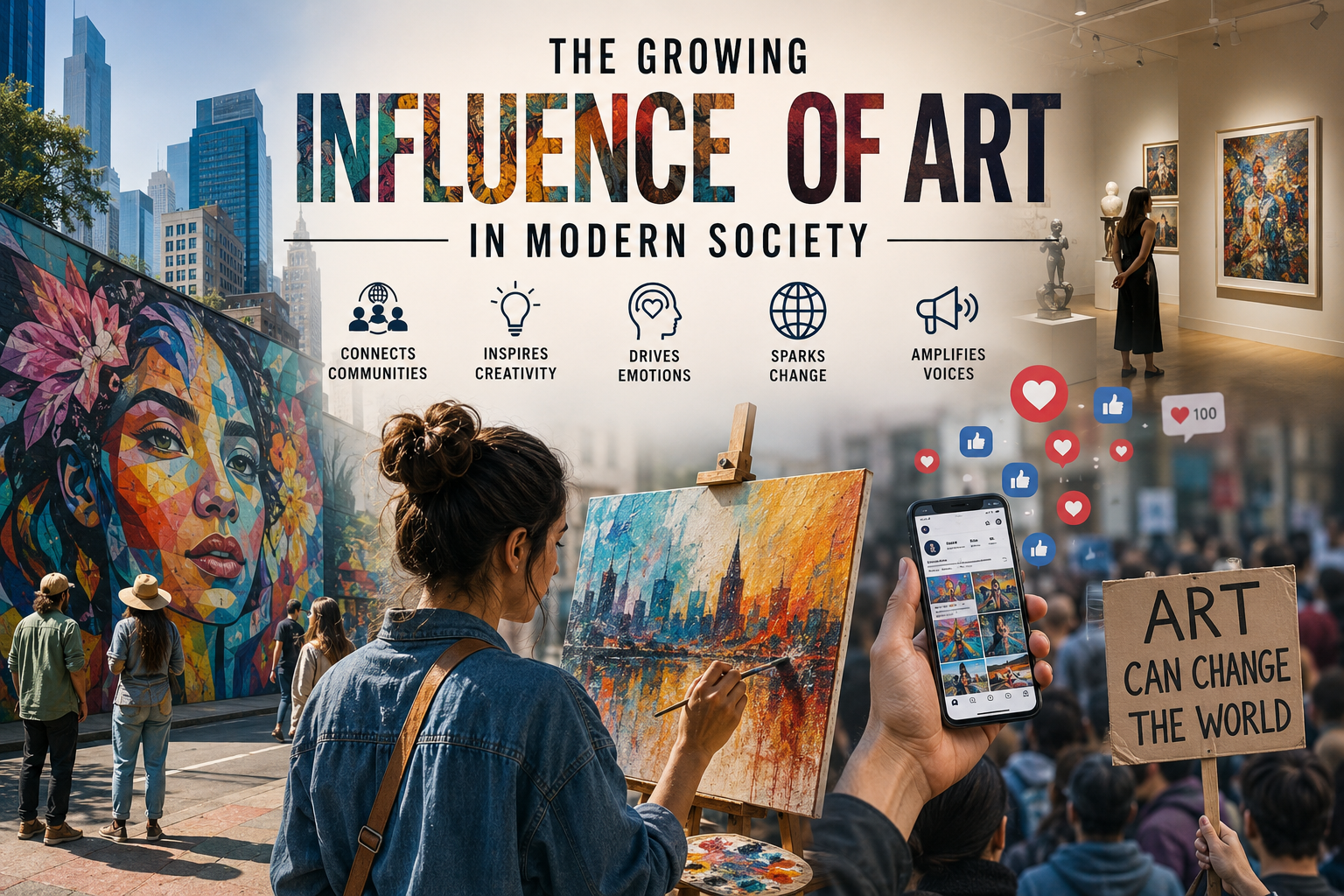
Art has been an important part of human civilization for thousands of years. From ancient paintings and sculptures to contemporary digital illustrations, photography, cinema, music, and installations, art has continuously evolved alongside society. It provides people with a way to express ideas, emotions, experiences, culture, and imagination.
In the modern world, art is no longer limited to galleries, museums, studios, or traditional materials. Digital technology has opened new possibilities for artists, allowing them to create, publish, promote, and sell their work through online platforms. Social media has also made it easier for artists to connect directly with audiences across different countries.
The growing influence of art can be seen in education, entertainment, business, fashion, architecture, technology, and everyday life. Whether it appears on a gallery wall, a smartphone screen, a public building, or a digital platform, art continues to shape how people understand and experience the world.
Understanding the Importance of Art
Art can take many forms, including painting, sculpture, photography, illustration, music, dance, theatre, literature, filmmaking, crafts, and digital media.
Art Is a Form of Expression
Artists often use their work to communicate thoughts and emotions that may be difficult to express through ordinary conversation.
A painting can communicate a mood through color and composition. A photograph can capture a moment in time. A sculpture can represent an idea through shape and form.
This ability to communicate without relying entirely on words makes art a powerful form of expression.
Art Reflects Society
Art often reflects the time and environment in which it is created.
Artists may be influenced by their culture, surroundings, personal experiences, technological developments, and social changes.
As a result, studying art can provide insight into different periods of history and the way people understood their world.
The Evolution of Traditional Art
Traditional forms of art continue to have an important place in modern culture.
Paintings, sculptures, textiles, pottery, handicrafts, folk art, and other traditional practices preserve cultural knowledge and artistic techniques.
Preserving Cultural Heritage
Traditional art can connect current generations with their cultural history.
Handcrafted objects, regional painting styles, traditional textiles, and folk performances often contain stories and techniques that have been passed down through generations.
Preserving these forms of art helps maintain cultural diversity.
Traditional Art Meets Modern Creativity
Many contemporary artists combine traditional techniques with modern ideas.
An artist may use traditional patterns in a contemporary painting or combine handmade elements with digital technology.
This combination can create new forms of artistic expression while maintaining connections with cultural heritage.
Digital Art Is Creating New Opportunities
Technology has transformed the creative process.
Artists can now use digital drawing tablets, design software, photography applications, animation tools, and other technologies to create artwork.
Digital Tools Expand Creative Possibilities
Digital tools allow artists to experiment with colors, shapes, textures, animation, and visual effects.
Mistakes can often be corrected easily, while different versions of an artwork can be created without starting from the beginning.
This flexibility can encourage experimentation.
Digital Art Can Reach Global Audiences
An artist can publish artwork online and potentially reach audiences from different countries.
Social media platforms, portfolio websites, digital communities, and online marketplaces have created additional ways for artists to showcase their work.
This has reduced some of the traditional barriers between creators and audiences.
Social Media and the Artist Community
Social media has become an important promotional tool for many artists.
Artists Can Build Personal Brands
Artists can share their creative process, finished work, exhibitions, collaborations, and personal stories online.
Regular communication can help artists build communities around their work.
A strong online presence can also introduce emerging artists to people who may never have visited a traditional gallery.
Audiences Can Interact Directly With Artists
Traditional art audiences often experienced artwork without directly communicating with the creator.
Digital platforms have changed this relationship.
People can comment on artwork, ask questions, share posts, and follow an artist's creative journey.
This creates a more interactive connection between creators and audiences.
Art and Technology Are Becoming More Connected
Technology is not simply changing how art is distributed. It is also influencing how art is created.
Artificial intelligence, virtual reality, augmented reality, animation, digital photography, and interactive installations are opening new creative possibilities.
Artificial Intelligence as a Creative Tool
AI-based tools can assist with brainstorming, image generation, editing, pattern creation, and other creative tasks.
Artists can experiment with these technologies while maintaining their own artistic direction.
The growing use of AI also creates important conversations about originality, authorship, creative control, and responsible technology use.
Virtual and Augmented Reality
Virtual reality can place viewers inside immersive artistic environments.
Augmented reality can add digital elements to physical surroundings through compatible devices.
These technologies can transform art from something audiences simply observe into something they actively experience.
Art in Education
Art plays an important role in education because it encourages creativity and imagination.
Encouraging Creative Thinking
Art activities can give students opportunities to experiment, make decisions, solve problems, and express ideas.
Creative activities can complement academic subjects by helping students develop different ways of thinking.
Learning Through Art
Art can also make other subjects more engaging.
Students can learn history through paintings and monuments, explore science through illustrations and models, or understand cultures through traditional crafts and performances.
This shows that art can be connected to many areas of education.
Art and Mental Well-Being
Creative activities can provide people with opportunities for relaxation and self-expression.
Drawing, painting, music, writing, photography, crafts, and other artistic activities can become enjoyable hobbies.
Creativity Can Provide a Break From Routine
Modern life can involve busy schedules and constant digital communication.
Creative activities can offer a chance to slow down and focus on something enjoyable.
People do not need to become professional artists to benefit from creative expression.
Art Can Help People Connect With Emotions
Creative work can provide a way to explore feelings, memories, and personal experiences.
For some people, creating or experiencing art can be a meaningful part of their personal well-being.
Art should not be viewed as a replacement for professional support when someone needs it, but it can be a valuable part of everyday life and personal expression.
The Relationship Between Art and Business
Art has a strong connection with modern business.
Brands use visual design, photography, illustration, packaging, advertising, architecture, and creative storytelling to communicate with customers.
Visual Identity Builds Recognition
A company's logo, colors, typography, packaging, website design, and advertising style can influence how customers recognize and remember a brand.
Creative design can help businesses communicate their personality and values.
Creativity Supports Marketing
Marketing campaigns often depend on strong visual storytelling.
A well-designed advertisement can capture attention and communicate an idea quickly.
As competition increases across digital platforms, creative presentation has become increasingly important.
Art and Fashion
Fashion is another area where art and creativity come together.
Designers use color, fabric, patterns, shapes, textures, and cultural influences to create clothing and accessories.
Designers Draw Inspiration From Culture
Fashion designers often find inspiration in architecture, history, nature, traditional crafts, music, and visual art.
This exchange between artistic fields can lead to new design ideas.
Fashion Can Become a Form of Self-Expression
Clothing allows individuals to communicate aspects of their personality and style.
People may choose colors, patterns, designs, and accessories based on their preferences, cultural background, or mood.
In this way, fashion can become a form of everyday visual expression.
Public Art Is Changing Urban Spaces
Art is not limited to museums and galleries.
Murals, sculptures, installations, street art, and creative public spaces can transform ordinary urban environments.
Making Public Spaces More Engaging
Public art can make streets, parks, buildings, and community areas more visually interesting.
Large murals can also become recognizable landmarks and attract visitors.
Supporting Local Artists
Public art projects can provide opportunities for local artists to showcase their creativity.
Communities can benefit when artists are given opportunities to contribute to the visual identity of their neighborhoods.
The Importance of Supporting Emerging Artists
New artists often face challenges when trying to gain recognition.
Digital platforms have made it easier to showcase work, but visibility can still be difficult because audiences have access to an enormous amount of content.
Exhibitions and Creative Communities Matter
Art exhibitions, workshops, festivals, galleries, online communities, and creative events can help emerging artists meet audiences and other professionals.
These spaces can provide opportunities for collaboration and learning.
Audiences Can Support Artists
People can support artists by attending exhibitions, purchasing original work, sharing their content, commissioning artwork, or simply engaging respectfully with their creative projects.
Support from audiences can encourage artists to continue developing their craft.
Art in the Entertainment Industry
Art plays a major role in movies, television, gaming, animation, theatre, and music.
Production design, costumes, visual effects, posters, animation, character design, and cinematography all involve artistic decisions.
Visual Storytelling Creates Memorable Experiences
A strong visual style can influence how audiences experience a story.
Colors, lighting, costumes, locations, and character designs can communicate information without requiring dialogue.
This demonstrates how closely art and storytelling are connected.
The Future of Art
The future of art is likely to become increasingly diverse.
Traditional painting, sculpture, photography, crafts, and performance will continue to exist alongside digital art, interactive installations, immersive experiences, and technology-assisted creativity.
Artists may increasingly work across multiple disciplines, combining physical materials with digital tools.
Greater Access to Creative Platforms
More people are likely to use digital platforms to share their creative work.
This can create opportunities for artists who may not have access to traditional galleries or large professional networks.
Creativity Will Remain Human-Centered
Technology may continue to change artistic processes, but human imagination, emotion, culture, experience, and interpretation will remain important.
Art is ultimately about more than producing an image or object. It is about communicating meaning and creating connections.
Conclusion
Art continues to play an important role in modern society because it provides people with ways to express ideas, preserve culture, explore emotions, communicate visually, and experience creativity.
Technology has expanded the possibilities available to artists, while social media and digital platforms have created new ways to connect creators with audiences.
At the same time, traditional art remains valuable because it carries cultural knowledge and connects modern society with history.
From classrooms and galleries to businesses, public spaces, fashion, entertainment, and digital platforms, art is present in many aspects of everyday life.
As technology continues to evolve, the definition of art may continue to expand. New tools and formats will create fresh possibilities, but the fundamental power of art will remain the same: to inspire imagination, communicate ideas, preserve stories, and help people see the world from different perspectives.