
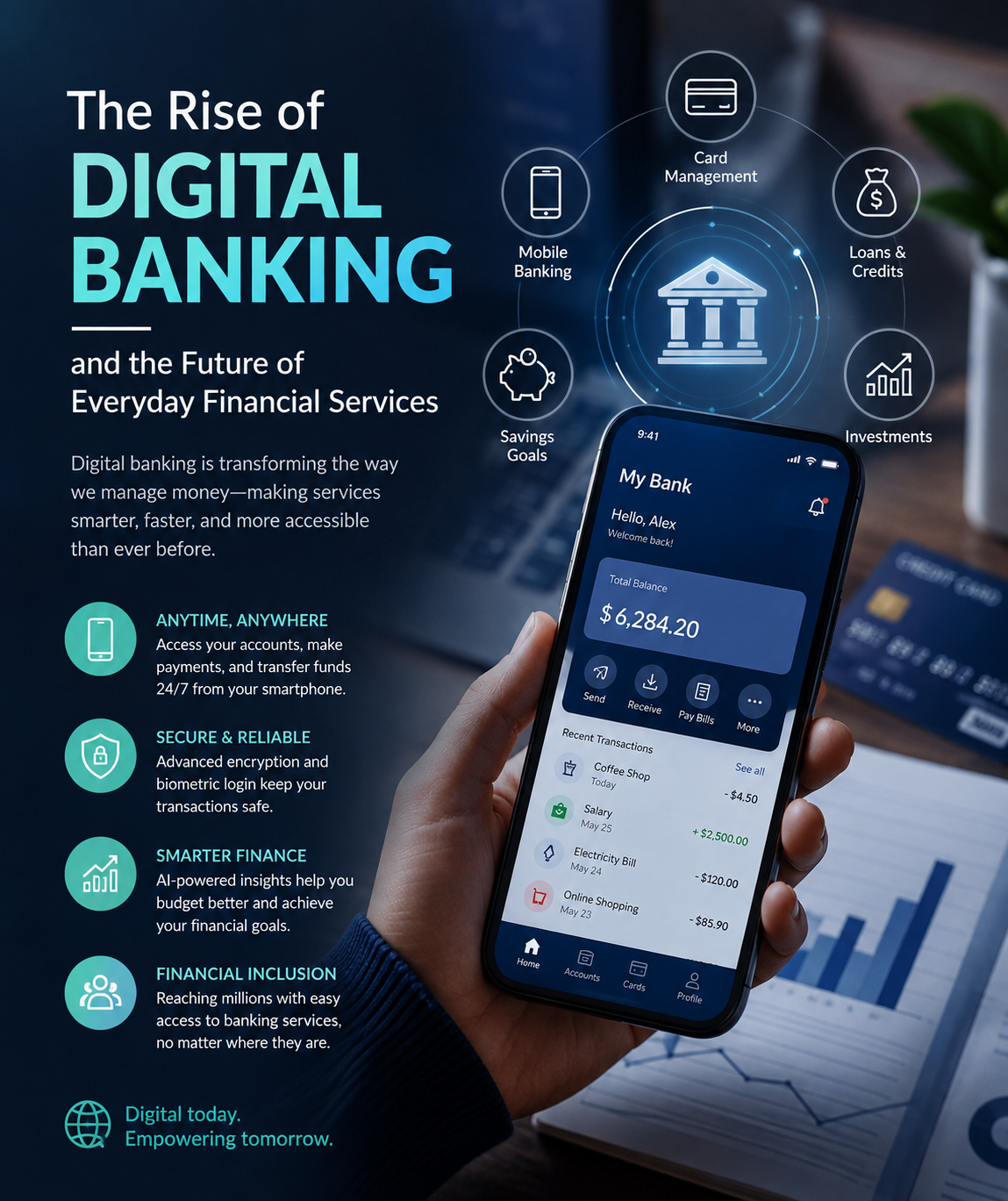
The way people manage money has changed significantly over the past few decades. Traditional banking once required customers to visit physical branches for many routine activities, such as transferring money, checking account balances, paying bills, or depositing documents. Today, digital technology has made many of these services available through smartphones and computers.
Digital banking has become an important part of modern financial life. People can transfer funds, pay bills, monitor transactions, manage accounts, and access various financial services without visiting a bank branch for every task. The growth of smartphones, internet connectivity, digital payment systems, and financial technology has accelerated this transformation.
The shift toward digital banking is not simply about convenience. It is also changing how financial institutions interact with customers, how businesses manage transactions, and how people think about everyday money management.
Understanding Digital Banking
Digital banking refers to banking services delivered through digital channels such as websites, mobile applications, and other electronic platforms.
Customers can access many banking services remotely, depending on what their financial institution provides.
Banking From Almost Anywhere
One of the biggest advantages of digital banking is convenience.
Customers can check balances, review transactions, transfer money, and make payments from home, at work, or while traveling.
This reduces the need to visit a physical branch for routine activities.
Mobile Banking Has Become Especially Important
Smartphones have made banking even more accessible.
Mobile applications can provide account information and transaction services through a device that many people already carry throughout the day.
This has made financial management more integrated into everyday routines.
The Growth of Digital Payments
Digital payments have become an important part of modern commerce.
People can pay for products and services through cards, mobile applications, online banking systems, QR-based payment methods, and other electronic options.
Faster Transactions
Digital payments can make transactions quick and convenient.
Customers do not always need to carry cash, while businesses can provide multiple payment options to suit different preferences.
Digital Payments for Small Businesses
Small businesses can also benefit from digital payment systems.
Local shops, independent professionals, restaurants, service providers, and online sellers can accept electronic payments without requiring complicated traditional infrastructure.
This can make it easier for smaller businesses to participate in the digital economy.
How Digital Banking Helps Customers
Digital banking offers several practical advantages.
Easy Access to Account Information
Customers can check their account balances and transaction histories without waiting for a monthly statement or visiting a branch.
Regularly reviewing transactions can also help people understand their spending habits.
Convenient Bill Payments
Digital banking platforms can allow customers to pay utility bills, subscriptions, fees, and other expenses online.
Automated payment options may also help people manage recurring expenses when used appropriately.
Faster Money Transfers
Digital systems can make transferring money between accounts more convenient.
The exact speed and availability of transfers depend on the financial institution and payment system being used.
Financial Management Is Becoming More Digital
Digital banking can provide tools that help people understand and organize their finances.
Tracking Spending
Some financial applications categorize transactions and provide summaries of spending patterns.
This information can help users identify areas where they may want to adjust their budgets.
Setting Financial Goals
Digital tools can also help people track savings goals.
For example, someone may set a target for a future purchase or emergency fund and monitor progress over time.
These tools do not replace sound financial planning, but they can make financial information easier to organize.
The Role of Financial Technology Companies
Financial technology, often called fintech, has expanded rapidly.
Fintech companies develop digital products and services related to payments, banking, investment, lending, insurance, and financial management.
Innovation in Financial Services
Fintech businesses often focus on making financial processes simpler and more accessible.
They may develop user-friendly applications, digital wallets, payment systems, budgeting tools, or other services.
Competition and innovation can encourage traditional financial institutions to improve their own digital offerings.
Partnerships Are Becoming More Common
Traditional banks and technology companies can work together to provide digital services.
Banks may benefit from technological expertise, while technology companies can gain access to established financial infrastructure and customer networks.
Such partnerships can contribute to the development of new financial products.
Artificial Intelligence in Digital Banking
Artificial intelligence is becoming increasingly relevant to financial services.
Banks and financial technology companies can use AI for areas such as customer support, data analysis, fraud detection, personalization, and operational automation.
AI-Powered Customer Support
Chat-based systems can answer common customer questions and provide basic assistance.
This can help customers find information quickly while allowing human support teams to focus on more complex situations.
Detecting Unusual Transactions
Technology can help financial institutions identify unusual transaction patterns and potentially flag activity that requires additional review.
Security systems continue to evolve as payment methods and digital threats change.
Digital Banking and Security
Security is one of the most important considerations in digital banking.
As more financial activities move online, customers need to understand how to protect their accounts and personal information.
Strong Authentication Matters
Banks may use passwords, PINs, one-time verification codes, biometric authentication, and other security measures.
Customers should follow their financial institution's security recommendations and avoid sharing confidential credentials.
Beware of Phishing and Scams
Scammers may attempt to obtain banking information through fake messages, websites, calls, or emails.
Customers should be cautious when receiving unexpected requests for passwords, verification codes, card details, or other sensitive information.
Instead of clicking suspicious links, users should access their bank through official applications or trusted channels.
Digital Banking for Businesses
Digital banking is not only useful for individual customers. Businesses also rely heavily on digital financial services.
Managing Business Payments
Companies can use online banking to manage payments to suppliers, employees, service providers, and other parties.
Digital records can also make transaction management more organized.
Improving Financial Operations
Businesses can connect financial services with accounting, payroll, invoicing, and other digital systems.
This can reduce repetitive manual work and provide a clearer overview of business finances.
Financial Inclusion and Digital Access
Digital financial services can create opportunities for people who may have limited access to traditional banking infrastructure.
Mobile-based services can sometimes reach customers in areas where physical branches are less convenient.
Access to Basic Financial Services
Digital accounts and payment systems can make certain financial services easier to access.
However, digital inclusion also depends on internet connectivity, device availability, financial literacy, and people's ability to use digital tools safely.
Digital Literacy Is Important
Access alone is not enough.
People need to understand how digital financial services work, how to identify scams, how to protect their accounts, and how to make informed financial decisions.
Education therefore plays an important role in the growth of digital banking.
Challenges of Digital Banking
Despite its advantages, digital banking has several challenges.
Dependence on Technology
Digital banking depends on internet connections, devices, software, and technical infrastructure.
Service interruptions can temporarily prevent customers from accessing certain services.
Privacy Concerns
Financial services involve sensitive personal information.
Banks and technology providers need strong security practices to protect customer data.
Customers should also understand the privacy settings and permissions associated with the financial applications they use.
Digital Skills Gaps
Some customers may find digital banking difficult, particularly if they are unfamiliar with smartphones or online services.
Financial institutions can help by providing clear instructions, accessible interfaces, customer support, and educational resources.
The Future of Digital Banking
The financial sector is likely to become even more digital in the coming years.
Artificial intelligence, automation, biometric security, open banking technologies, digital identity systems, and personalized financial services may continue to influence the industry.
More Personalized Financial Experiences
Digital platforms may increasingly provide financial information based on individual customer needs and preferences.
For example, applications may offer customized budgeting insights, spending summaries, or savings suggestions.
Customers should still make independent decisions and carefully evaluate any financial recommendation before acting on it.
Banking May Become More Integrated
Financial services may become increasingly connected with shopping, business software, payment platforms, and other digital activities.
This could make financial transactions more seamless while also increasing the importance of privacy and security.
The Importance of Responsible Digital Banking
Technology can make financial management easier, but customers still need responsible habits.
Regularly checking transactions, using secure passwords, enabling available security features, avoiding suspicious communications, and maintaining awareness of financial activity can help people use digital services more safely.
Digital convenience should be combined with financial discipline.
Conclusion
Digital banking has transformed the way people and businesses interact with financial services. Mobile applications, online banking platforms, digital payments, fintech solutions, and automated services have made many everyday financial activities faster and more convenient.
At the same time, the growth of digital finance has increased the importance of cybersecurity, privacy, digital literacy, and responsible financial behavior.
The future of banking is likely to become even more connected and technology-driven. Artificial intelligence, automation, improved security systems, and personalized digital experiences may continue to reshape financial services.
However, the central goal of banking will remain the same: helping people and businesses manage money effectively and access useful financial services. As technology continues to evolve, the most successful digital banking experiences will likely be those that combine convenience, security, accessibility, and customer trust.