
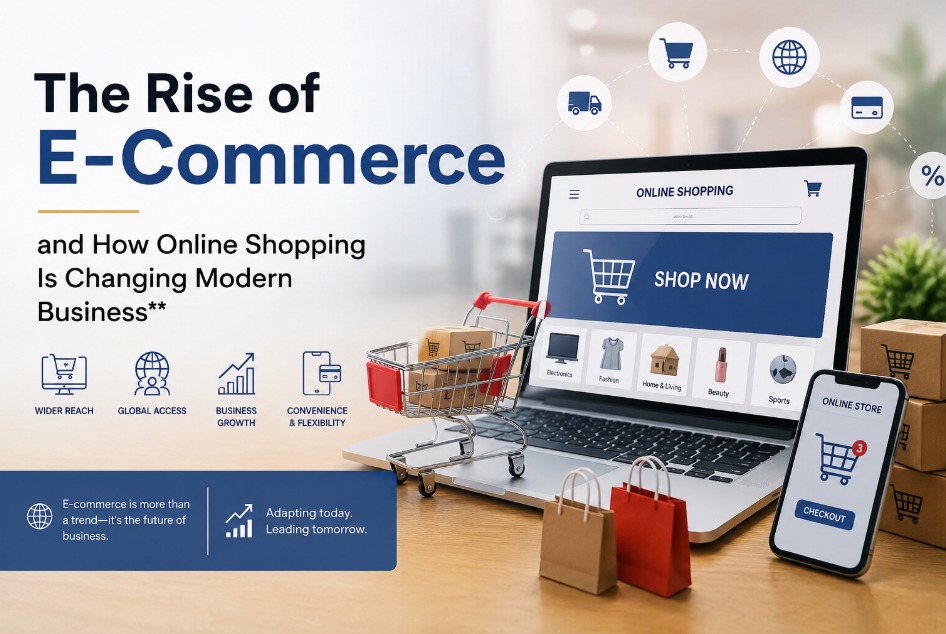
E-commerce has become one of the most important developments in modern business. The way people discover products, compare prices, place orders, make payments, and receive purchases has changed significantly with the growth of the internet and smartphones.
Traditional shopping remains popular, but online shopping has created an additional channel that provides convenience and greater access to products and services. Customers can browse thousands of products without visiting multiple stores, while businesses can reach buyers beyond their local markets.
The growth of e-commerce has also created opportunities for small businesses, independent creators, entrepreneurs, and established brands. From fashion and electronics to groceries, books, beauty products, and home essentials, almost every category can now be found online.
Understanding E-Commerce
E-commerce refers to the buying and selling of products or services through digital platforms.
An online store may operate through a dedicated website, mobile application, marketplace, or social media platform.
Online Shopping Offers Convenience
One of the biggest advantages of e-commerce is convenience.
Customers can browse products from home or while traveling. They do not need to visit a physical store for every purchase.
Online shopping can be particularly useful for people with busy schedules.
Product Variety Has Expanded
Physical stores have limited shelf space, while online stores can display a much larger selection.
Customers can compare products from different brands and choose according to their preferences, budget, and requirements.
How Smartphones Changed Online Shopping
The widespread use of smartphones has contributed significantly to the growth of e-commerce.
Shopping From Mobile Devices
Customers can search for products, read descriptions, compare prices, place orders, and track deliveries through mobile devices.
This makes shopping possible at almost any time.
Mobile-Friendly Businesses
Businesses increasingly design websites and shopping applications for mobile users.
Easy navigation, clear product information, secure payments, and simple checkout processes can improve the customer experience.
The Growth of Digital Payments
Digital payment systems have made online shopping more convenient.
Multiple Payment Options
Customers may be able to choose from cards, online banking, digital wallets, mobile payment systems, and other available options.
Offering multiple payment methods can make online shopping more accessible to different types of customers.
Secure Payments Build Confidence
Customers want to know that their financial information is protected.
Businesses therefore need reliable payment systems and appropriate security measures to create trust.
Consumers should also avoid entering payment information on suspicious or unverified websites.
The Importance of Customer Experience
E-commerce is highly competitive.
Customers can easily compare multiple businesses, making the overall shopping experience an important factor.
Easy Website Navigation
An online store should make it simple for customers to find products.
Clear categories, search functions, filters, product descriptions, and organized pages can help users move through the website more easily.
Fast and Clear Checkout
A complicated checkout process can discourage customers from completing a purchase.
Businesses can improve the experience by keeping checkout steps clear and providing important information about payment, shipping, and delivery.
Product Reviews and Customer Trust
Online customers cannot physically examine a product before purchasing it.
Reviews and ratings can therefore influence purchasing decisions.
Why Reviews Matter
Customers often look at other buyers' experiences before making a decision.
Reviews can provide information about product quality, usability, packaging, and overall satisfaction.
Businesses Should Encourage Genuine Feedback
Authentic customer feedback can help businesses understand what customers like and where improvements are needed.
Companies should avoid misleading practices and focus on building trust through transparent communication.
Social Media and E-Commerce
Social media has become an important part of online shopping.
Discovering Products Through Content
People may discover products through short videos, photographs, creator recommendations, advertisements, or brand pages.
This has connected entertainment, content creation, and shopping more closely.
Social Commerce
Some platforms allow users to discover products and move directly toward purchasing without leaving the digital environment.
This can create a smoother journey from product discovery to purchase.
The Growth of Small Online Businesses
E-commerce has created opportunities for entrepreneurs who may not have the resources to open traditional stores.
Starting With a Small Product Range
A new business can begin by selling a limited number of products and gradually expand based on customer demand.
This allows entrepreneurs to test ideas before making larger investments.
Reaching Customers Beyond Local Areas
An online business is not necessarily limited to customers living nearby.
Depending on logistics and business policies, sellers can reach customers across cities, regions, and even international markets.
E-Commerce and Entrepreneurship
Online shopping has created new business models.
Entrepreneurs can sell handmade products, digital products, customized goods, subscription services, and specialized products through digital channels.
Niche Markets Are Easier to Reach
A physical store may depend heavily on local demand.
An online store can reach customers who have specific interests, even if those customers are spread across different locations.
This has created opportunities for specialized businesses.
The Role of Digital Marketing
E-commerce and digital marketing are closely connected.
Businesses need to attract potential customers to their online stores.
Search Engine Optimization
Search engine optimization can help businesses improve their visibility when people search for relevant products or services online.
Product pages, category pages, informative content, technical performance, and useful information can all contribute to an effective search strategy.
Social Media Marketing
Businesses can use social platforms to showcase products, share educational content, announce offers, communicate with customers, and build brand awareness.
A strong social presence can complement other marketing channels.
Personalization in Online Shopping
Technology allows e-commerce platforms to provide personalized experiences.
Product Recommendations
Online stores may recommend products based on browsing patterns, previous purchases, or related products.
These recommendations can help customers discover items they may find useful.
Personalized Communication
Businesses can also send relevant updates, product information, or promotional messages based on customer preferences.
However, personalization should be balanced with responsible data practices and respect for customer privacy.
The Role of Artificial Intelligence
Artificial intelligence is increasingly being used in e-commerce.
AI-Powered Customer Support
Chat-based systems can help answer common questions about products, orders, shipping, and store policies.
This can provide customers with faster access to basic information.
Improving Business Operations
AI can also assist businesses with demand forecasting, inventory planning, product recommendations, content creation, and customer analysis.
Human oversight remains important, especially for decisions involving customers and business operations.
The Importance of Logistics and Delivery
A successful e-commerce business depends on more than a good website.
Products need to reach customers efficiently.
Delivery Experience Matters
Customers often consider delivery speed, tracking availability, packaging, and reliability when evaluating an online store.
Clear communication about expected delivery times can improve customer expectations.
Packaging
Packaging protects products during transportation.
At the same time, businesses are increasingly considering ways to reduce unnecessary packaging materials while maintaining product safety.
E-Commerce and Customer Service
Customer support remains important even when transactions happen online.
Handling Questions
Customers may have questions about product specifications, availability, payment, shipping, returns, or warranties.
Clear support channels can help resolve these concerns.
Building Long-Term Relationships
A successful business does not focus only on the first purchase.
Good customer service, reliable products, transparent policies, and consistent communication can encourage customers to return.
Challenges of E-Commerce
Despite its many benefits, online shopping also presents challenges.
Strong Competition
Customers can compare multiple businesses quickly.
This means companies need to differentiate themselves through product quality, pricing, service, branding, convenience, or customer experience.
Cybersecurity Concerns
Online businesses handle sensitive customer information.
Protecting accounts, payment information, and personal data is essential.
Companies need appropriate security measures and customers should follow safe online shopping practices.
Returns and Refunds
Customers cannot physically examine products before purchasing them.
As a result, returns can become an important part of e-commerce operations.
Clear return and refund policies can help customers understand what to expect.
The Growth of Omnichannel Shopping
Modern businesses are increasingly combining online and offline shopping experiences.
Online and Physical Stores Can Work Together
A customer may discover a product online, visit a physical store to see it, and later complete the purchase through an app.
Another customer may purchase online and collect the product from a store.
These connected experiences can provide greater flexibility.
Consistent Brand Experience
Customers expect similar information, pricing policies, service quality, and branding across different channels.
Businesses that coordinate their digital and physical operations can provide a more seamless experience.
Sustainable E-Commerce
As online shopping grows, sustainability is becoming an important consideration.
Businesses can explore ways to reduce unnecessary packaging, improve delivery efficiency, manage returns responsibly, and reduce waste.
Responsible Consumer Choices
Consumers can also make thoughtful choices by purchasing products they genuinely need, avoiding unnecessary returns, and selecting durable products when possible.
Sustainability is a shared responsibility between businesses and customers.
The Future of E-Commerce
The future of online shopping is likely to involve greater integration between technology, logistics, social media, and personalized customer experiences.
Artificial intelligence, augmented reality, voice-based shopping, faster delivery systems, digital payments, and improved mobile experiences may influence how consumers shop.
More Interactive Shopping
Technologies such as augmented reality may allow customers to visualize certain products in their homes or explore how items could look before purchasing.
Continued Growth of Mobile Commerce
As smartphone usage continues to expand, mobile shopping is likely to remain an important part of e-commerce.
Businesses will need to ensure that their digital experiences are fast, accessible, secure, and easy to use.
Conclusion
E-commerce has transformed modern shopping by providing convenience, product variety, flexible payment options, and access to businesses across different locations.
For entrepreneurs, online commerce has created new opportunities to build businesses without relying entirely on traditional physical stores. For established companies, it has become an important way to connect with customers and expand their markets.
At the same time, successful e-commerce requires more than simply creating an online store. Businesses need to focus on customer experience, security, product quality, delivery, service, digital marketing, and long-term trust.
As technology continues to develop, online shopping will likely become even more integrated into everyday life. The businesses that combine technology with convenience, transparency, responsible practices, and genuine customer value will be well positioned to participate in the future of digital commerce.